Mission-Driven Teams Playbook for the Age of Agentic AI

Build mission-driven, human-centered teams

A practical framework for the age of agentic AI to align teams around mission, connect to users, and deliver outcomes. Explore the playbook and spring into action with role-specific workbooks.

The Landscape Has Changed

As we begin 2026, agentic AI systems can design interfaces, write code, generate tests, deploy infrastructure, and handle much of the technical implementation that once defined software development. This transformation is accelerating rapidly.

This is where human capabilities matter most. When we understand the deeper mission, empathize with real users, decide which problems are worth solving, and work through complex trade-offs, we amplify what AI can do. As AI handles more of the implementation, these human capabilities become the real advantage.

The teams that will thrive are those that excel at the uniquely human work: deciding why to build something and what to build. This playbook is your guide to building those capabilities.

Why This Playbook Matters now more than ever

The shift from "how to build" to "why and what to build" demands new capabilities and fundamental cultural and behavioral changes

The Automation Paradox

As agentic AI handles more of the "how," teams that excel at mission alignment, user understanding, and strategic reasoning will build solutions that truly matter. This framework focuses on the human capabilities that uniquely complement AI and multiply its impact.

Why & What Over How

Six principles that guide teams to make better decisions about what to build: shared mission, cross-functional collaboration, direct user engagement, outcomes over outputs, domain knowledge, and storytelling. These are the skills that define great teams in the AI era.

Practical Role Guidance

Concrete "do now" activities for every role (from developers to product managers to designers) focused on building the human capabilities that matter most when AI handles implementation. Each workbook helps you excel at strategic thinking and user-centered decision-making.

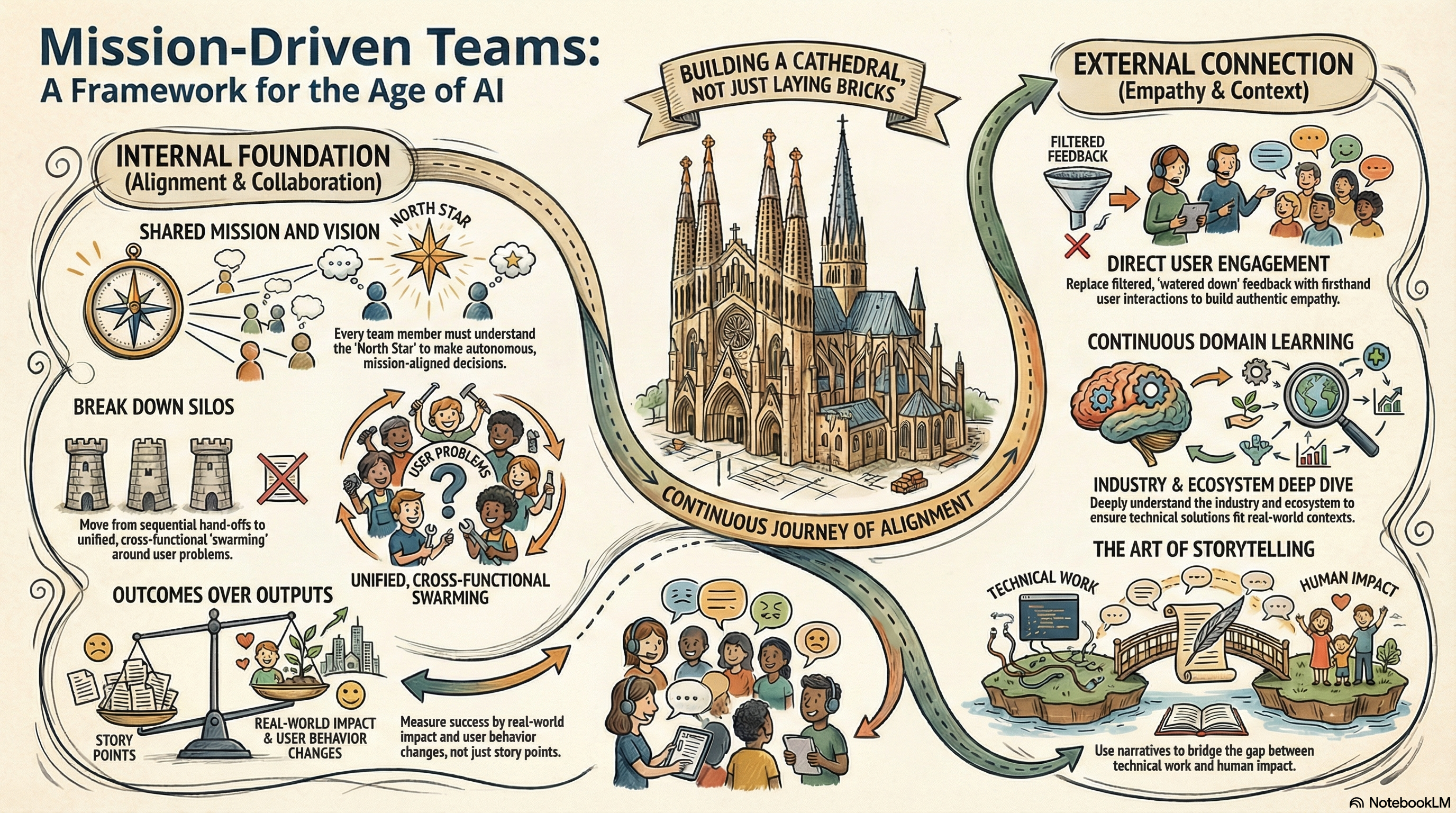
Framework Overview

Visual guide to the Mission-Driven Teams framework

Mission-Driven Teams Framework Infographic

Infographic generated with Google NotebookLM. Thank you Google.

Watch & Listen

A quick overview of the Mission-Driven Teams framework: choose video or audio.

Video Overview

Introduction to the Mission-Driven Teams framework

Audio Overview

Listen to "Connecting Code to Customer and Impact"

Video and audio overviews generated with Google NotebookLM. Thank you Google.

Presentation Decks

Ready-to-use slide decks to introduce the framework to your teams

Presentation decks generated with Google NotebookLM. Thank you Google.

Get Started

Build the human capabilities that matter most in the age of agentic AI

Start with the Framework

Learn the principles and practices that help teams excel at deciding what to build: the strategic work that defines great teams in 2026.

Explore the framework โ†’

Apply with Workbooks

Role-specific activities focused on building mission alignment, user understanding, and strategic reasoning: the capabilities that set teams apart when AI handles implementation.

Open the workbook library โ†’

Download & Print

Grab the PDFs for offline review, print in light mode, and share with teams.

About the Author

Built from real-world experience leading teams in complex environments

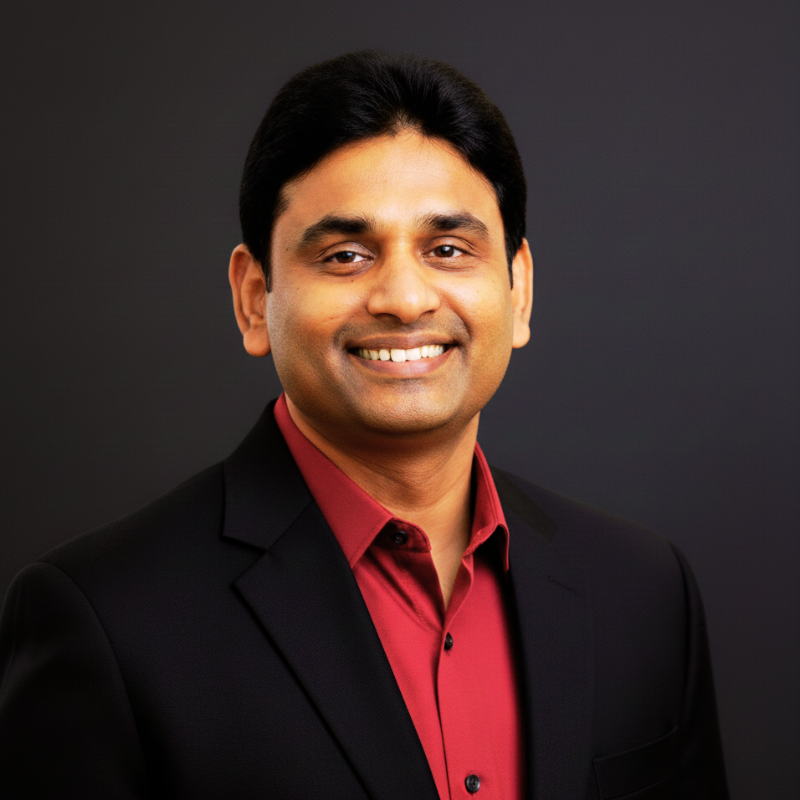
Murali Mallina is an accomplished technology leader with over 27 years of experience in developing transformative software solutions and cultivating high-performing teams. As both a builder and leader, he has built multiple teams and software solutions and has served as Chief Technology Officer (CTO) for more than 15 years, driving innovation across supply chain management, edTech, workforce, telecommunications, and healthcare sectors. He has been working with federal agencies for the last 9 years.

With a robust expertise in team building and establishing Centers of Excellence (CoEs), Murali has implemented frameworks that enhance organizational capabilities, promoting innovation and operational excellence across various domains. A dedicated educator and mentor, he founded Teaching for Good, which inspires learners through computer science clubs and comprehensive training programs.

Recognized for his thought leadership, Murali frequently speaks at industry conferences and meetups, sharing valuable insights on AI/ML, DevSecOps, agility, and scalable architectures. An award-winning academic, he continues to merge innovation with purpose, creating impactful solutions for both businesses and communities.

This framework is born from practical experience. Throughout his career, Murali has spent significant time working with services organizations, consulting firms, and system integrators, often in complex environments with multiple stakeholders, limited direct user access, and intricate organizational structures. The strategies and principles outlined here aren't theoretical concepts; they're practical approaches that have worked in the trenches.

While Murali came up with many of these ideas and ran most of the experiments, he learned a great deal from his peers and teams across many organizations. Credit is also due to everyone who contributed their insights, experiences, and feedback along the way.